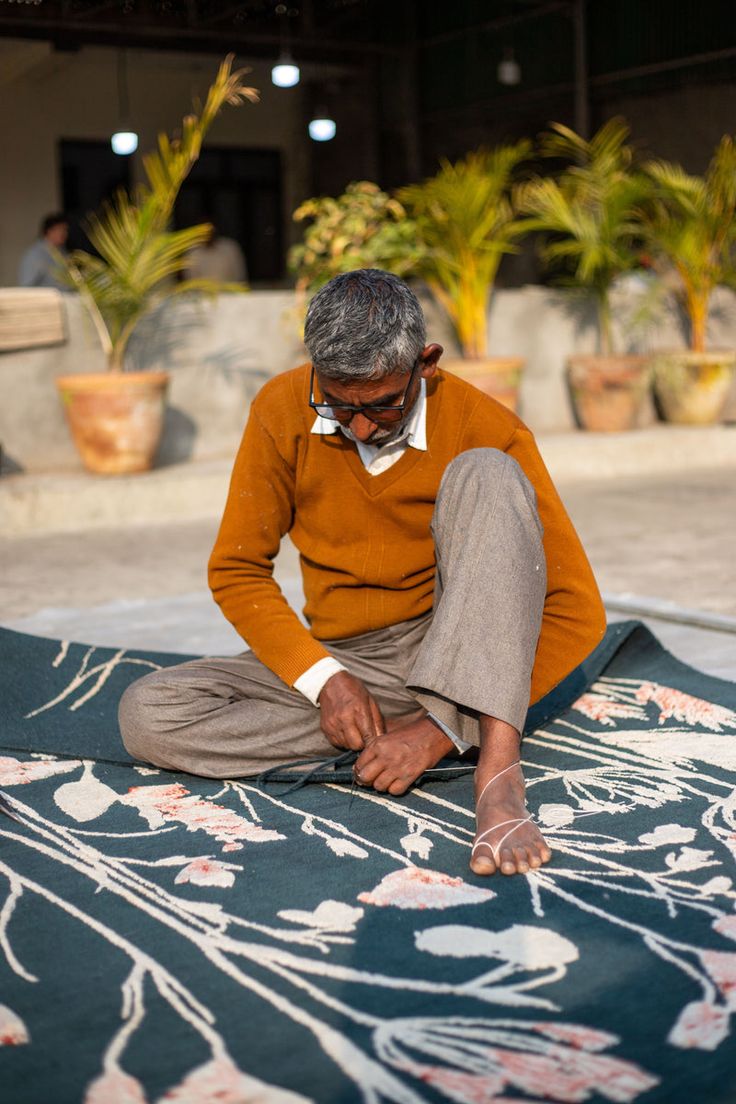
In Bhadohi, a carpet does not begin in a showroom. It begins with a design, a bundle of yarn and the patient hands of an artisan.
Known internationally for its handmade carpet industry, Bhadohi is home to generations of weavers and rug makers. Their work reaches living rooms, hotels and design studios around the world, yet the people behind these rugs are rarely seen by the final buyer.
This article follows the daily rhythm commonly seen inside a local Bhadohi carpet workshop. It does not create a fictional artisan or use invented quotations. Instead, it offers a simple and honest look at the skill, concentration and teamwork involved in making a handmade rug.
The Day Begins Early
For many carpet artisans in Bhadohi, the working day begins in the morning, before the streets become busy and the temperature starts to rise.
The workshop may be a large production space or a smaller unit connected to a family home. Some artisans work at traditional horizontal or vertical looms, while others use tufting frames and hand-operated tufting guns. The exact setup depends on the type of rug being produced.
Before starting, the artisan checks the work completed the previous day. The design, yarn colours and tools are placed within easy reach. A few minutes spent checking everything at the beginning can prevent mistakes later.
In carpet making, even a small error can disturb the balance of a pattern. That is why experienced artisans rarely rush into the work. They first understand which section must be completed and which colours will be needed.
Reading the Design Before Touching the Yarn
A carpet design works like a map. It shows the pattern, proportions and colour placement that the artisan must follow.
For a hand-knotted carpet, the weaver may follow a traditional design chart known locally as a naksha. For a hand-tufted rug, the full-size pattern is generally transferred onto a primary backing cloth stretched over a frame.
The artisan studies the outlines carefully before beginning. Curves, floral motifs, borders and geometric shapes require different hand movements. Complicated sections may need slower work, while broad areas of a single colour can be completed more steadily.
This ability to read a design and reproduce it in yarn develops through practice. Experienced artisans learn to notice small differences in spacing, tension and colour that may not be obvious to someone outside the craft.
To understand the complete production journey, read https://bhadohiweaves.com/how-bhadohi-carpets-are-made-step-by-step-journey-from-loom-to-living-room/crafting-heritage-bhadohi-artisans-at-work
The Main Work Begins
Watch how a Bhadohi artisan carefully follows the rug design.
Once the materials are ready, the artisan starts working on the rug.
A traditional weaver builds the carpet row by row, carefully controlling every knot and line. A hand-tufting artisan guides yarn through stretched backing with a tufting gun. Although the techniques are different, both require steady hands and close attention.
The artisan must maintain the correct yarn density and tension throughout the rug. If one section is packed too tightly and another is too loose, the surface may look uneven. Curved lines and narrow details are especially demanding because they leave little room for correction.
The work can appear repetitive when seen from a distance, but each movement has a purpose. The artisan constantly looks at the design, checks the yarn placement and makes small adjustments.
It is quiet, focused work. The sound may come from the loom, the movement of tools or the short mechanical rhythm of a tufting gun. Conversation happens, but concentration remains important.
Skill Is Built Through Repetition
Many Bhadohi artisans learn the basics of carpet making from relatives, experienced weavers or other craftspeople in their community. They begin with simpler tasks and gradually move towards more detailed work.
The knowledge is practical. It is learned by watching, repeating and correcting. Over time, the artisan understands how different yarns behave, how much pressure to apply and how to keep a pattern balanced.
This does not mean every artisan follows exactly the same path. Workshops use different materials, tools and production methods. However, patience and accuracy are valued everywhere.
A handmade rug records countless small decisions made during production. The direction of the yarn, the clarity of a curve and the spacing between colours all reflect the artisan’s control.
For more stories about local craftsmanship, visit https://bhadohiweaves.com/meet-the-weavers-real-life-stories-of-bhadohi-artisans/crafting-heritage-bhadohi-artisans-at-work
A Short Break and a Fresh Look
Detailed carpet work requires both physical effort and mental concentration. Artisans often work in one position for long periods, so short breaks are important.
Tea and conversation provide a brief pause from the design. These moments also allow artisans to discuss the work, compare progress or ask another experienced worker to examine a difficult section.
After a break, the artisan often looks at the rug from a short distance. This wider view can reveal something that was difficult to notice while working close to the surface. A line may need adjustment, a colour boundary may need cleaning or an area may require more yarn.
Quality checks do not happen only at the end. They continue throughout the day.
Teamwork Behind a Finished Rug
Several skilled people may contribute before a handmade rug is ready
A completed rug is rarely the work of only one person. Different people may contribute at different stages.
A designer prepares the pattern. Another person selects or dyes the yarn. An artisan weaves or tufts the rug. After that, other skilled workers may apply backing, trim the surface, carve the design, finish the edges, clean the rug and inspect it before packing.
Each stage depends on the one before it. Excellent tufting can lose its beauty if the carving is careless. A well-carved surface can still be affected by poor backing or uneven edge finishing.
This teamwork is one reason a handmade carpet takes time. The aim is not simply to complete the piece quickly, but to move it through each stage with care.
You can see the detailed finishing stages inhttps://bhadohiweaves.com/how-hand-tufted-rugs-are-finished-step-by-step-guide-with-real-bhadohi-workshop-video/crafting-heritage-bhadohi-artisans-at-work
From Plain Yarn to a Clear Pattern
By the afternoon, the section completed during the day becomes easier to see. Loose yarn and open backing gradually turn into a recognisable shape.
This transformation is one of the most interesting parts of carpet making. A floral motif gains its outline, a geometric border becomes sharper or a plain section begins to show a consistent surface.
The artisan pauses from time to time to check the work from the front. If a gap, uneven area or incorrect colour is found, it is usually better to correct it before continuing.
Handmade production naturally includes small variations. These should not be confused with carelessness. Slight differences in yarn direction or handwork can give a rug its individual character, while proper inspection ensures that the overall design and quality remain consistent.
When the Working Day Ends
Before leaving, the artisan checks the day’s progress and prepares the work for the next morning. Yarn is organised, tools are placed safely and the unfinished rug remains secured on its loom or frame.
A large or highly detailed rug cannot be completed in a single day. Depending on its size, technique, colours and pattern complexity, production may continue for many days or weeks.
The next morning, the artisan returns to the same design and continues from the exact point where the work stopped. Slowly, section by section, the rug moves closer to completion.
For the buyer, the final rug may arrive as one finished product. For the artisan, it represents many working hours, repeated checks and careful hand movements.
Why the Artisan’s Story Matters
When people buy a handmade rug, they are not only choosing a floor covering. They are supporting a chain of skills connected to design, yarn preparation, weaving, tufting and finishing.
Understanding the artisan’s work helps buyers appreciate why handmade rugs are different from mass-produced alternatives. The value is found not only in the material, but also in the time, concentration and human judgement involved.
Bhadohi’s carpet tradition continues because skilled artisans keep this knowledge active. Designs and customer preferences may change, but the importance of patient workmanship remains.
To explore more about this heritage, read https://bhadohiweaves.com/why-bhadohi-rugs-are-famous-worldwide%f0%9f%8c%8f-a-story-of-tradition-craftsmanship-and-culture/crafting-heritage-bhadohi-artisans-at-work
Bringing Bhadohi Craftsmanship into Your Home
Bhadohi Eco India connects international buyers with handmade and made-to-order rugs produced through experienced local partners in Bhadohi. Available colours, dimensions and design customisations can be discussed according to the selected rug.
If you would like to explore our current designs, https://bhadohiecoindia.etsy.com visit the Bhadohi Eco India shop on Etsy.
For a custom rug, you can contact us through Etsy before ordering. Share your required dimensions, preferred colours and design reference, and we can discuss the available production options and estimated timeline.
Final Thoughts
A day in the life of a Bhadohi carpet artisan is built around patience, rhythm and close attention to detail. Progress may appear slow, but every completed section brings the design closer to life.
Behind each handmade rug are people who understand yarn, colour, texture and pattern through years of practical work. Their contribution deserves to be seen and valued.
The next time you look at a handmade carpet, take a moment to notice its lines, surface and small details. Each of them carries a part of the work that happened long before the rug reached its final home.